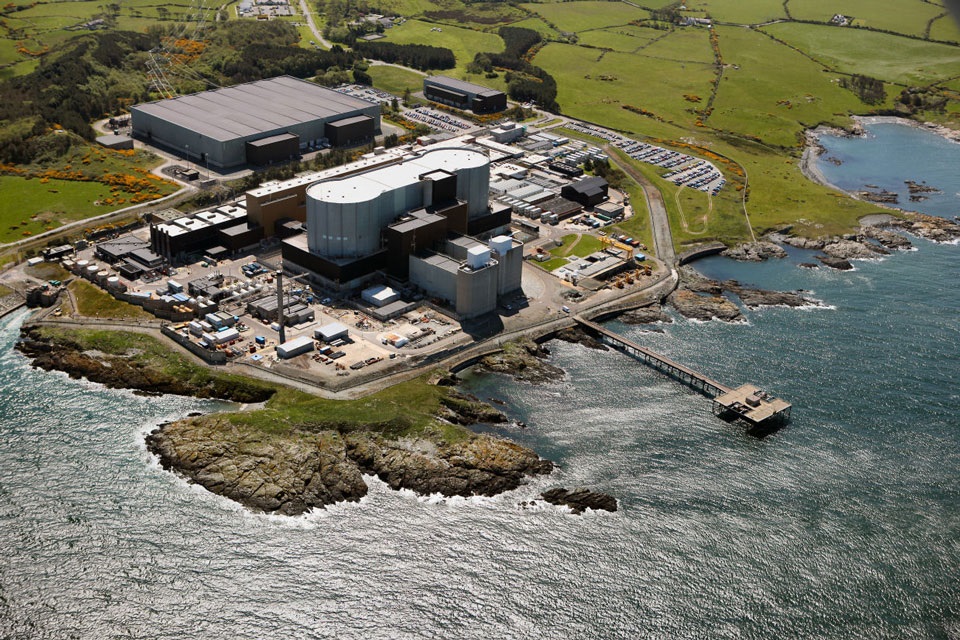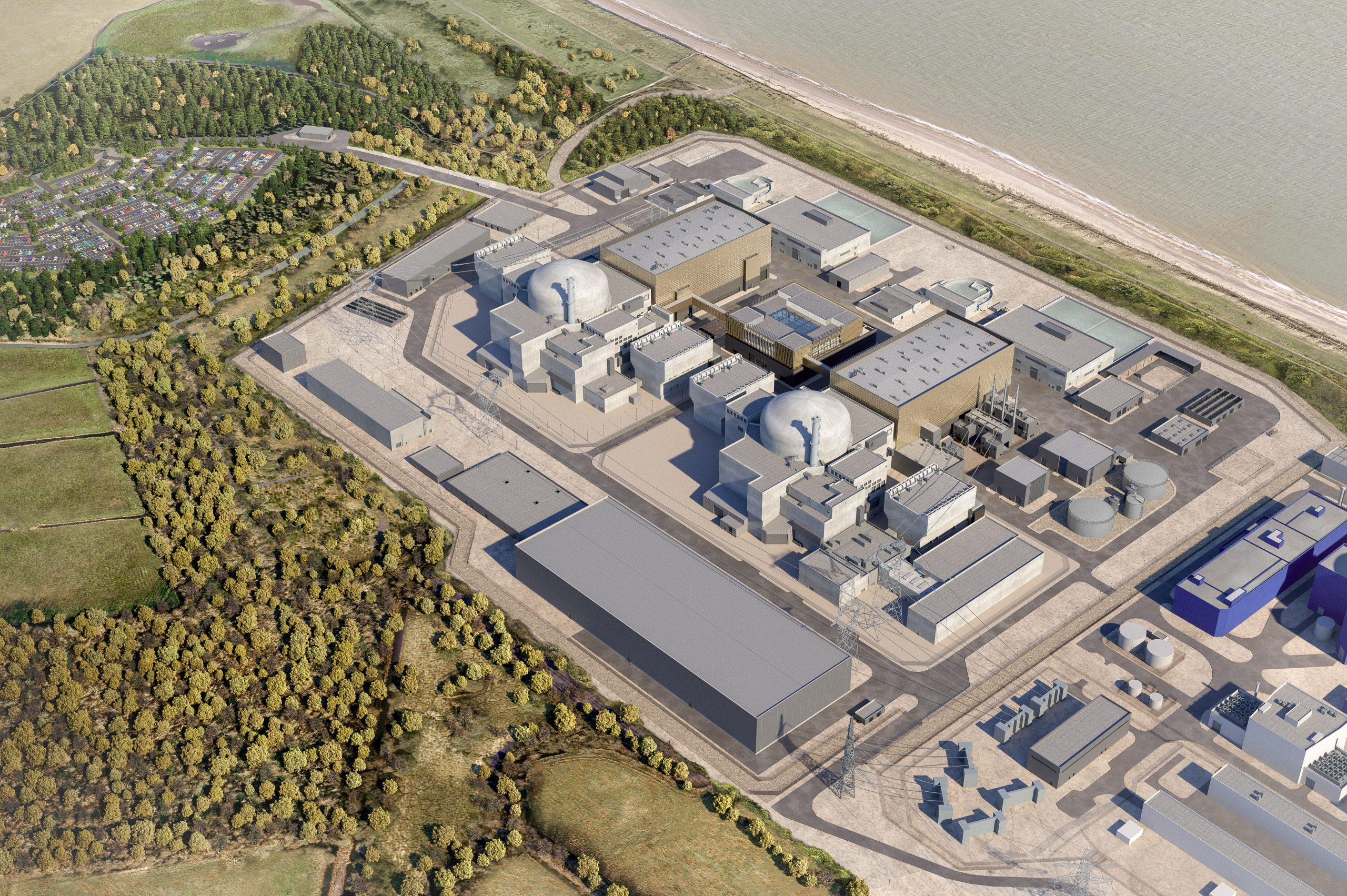
The Wylfa nuclear site has an unusual gravitational pull in UK nuclear policy. Every time the national programme shifts, from Magnox legacy, to gigawatt scale replacement, to today’s fleet-first SMR strategy, the conversation seems to circle back to the north coast of Ynys Môn. That repetition is not habit or sentimentality; it is the consequence of hard factors that remain broadly stable over time: a proven nuclear location, available land, an export-capable grid route, maritime access, and a community that has lived with nuclear for more than half a century. With Great British Energy – Nuclear confirming Wylfa as the first UK site for three Rolls-Royce SMRs, the site is once again moving from possibility into planning reality.
Wylfa’s nuclear story: persistence, pauses, and lessons
The existing Wylfa Magnox station began operations in 1971 and ran until final shutdown on 30 December 2015, closing the chapter on Magnox generation in the UK. Defuelling was completed in 2019 with nearly 88,000 fuel elements removed, and the NDA’s decommissioning programme continues to reshape the site and its workforce profile. The crucial legacy here is not just infrastructure, but a deep local familiarity with nuclear work, radiological control and the rhythms of major industrial operations. That matters for future build confidence in a way that is difficult to replicate at greenfield sites.
The most recent “almost” was Wylfa Newydd, Horizon Nuclear Power’s proposal for two large ABWR units. The project accumulated a substantial evidence base and progressed through planning, but Hitachi suspended development in January 2019 and later withdrew, citing the inability to reach a viable financing structure for a build exceeding £20 billion. In parallel, the Planning Inspectorate’s examination exposed a different family of risks: not whether Wylfa was a technically suitable location, but whether the scale and tempo of a gigawatt class construction labour force could be absorbed by a small island community without unacceptable impact on housing, services, biodiversity and Welsh language and culture. Wylfa Newydd therefore left a dual lesson that should shape the SMR era: delivery models fail if they are financially brittle, and they stumble socially if they underestimate the lived reality of place.
The new chapter: Rolls-Royce SMRs and a fleet approach
In November 2025, GBE-N confirmed Wylfa as the launch site for the first UK SMR fleet, with three Rolls-Royce units planned. The design itself is a 470 MWe pressurised water reactor intended for factory led manufacture and repeat builds, and it is progressing through the UK Generic Design Assessment. This is a decisive shift from the previous Wylfa Newydd model. Instead of a bespoke mega project dominated by on-site construction complexity, the delivery model is standardisation, modularity and learning-curve gains across a fleet. This shift matters because Wylfa is intended to host multiple SMRs built to the same standard, so later units can benefit from the learning and approvals gained on the first.
If the UK is serious about making SMRs a cost reducing delivery option, sites like Wylfa that can host multiple units, sequentially or in overlap, are almost inevitable candidates.
Why Wylfa keeps returning: strengths that stand the test of time
Technically and strategically, Wylfa remains one of the most enabling nuclear locations in Britain. It is a previously licensed nuclear site with a long regulatory history and an established industrial footprint. That does not remove scrutiny. SMRs will still face full licensing, permitting and planning tests, but it does reduce first time uncertainty. Land availability around the existing station also matters for an SMR fleet: three units require space for phased construction laydown, repeatable module logistics, and shared site services without the cramped constraints that many older sites face.
Grid export is another enduring advantage. The North Wales Connection project, developed to support Wylfa Newydd, secured a Development Consent Order in 2017 and set out the pathway for a 400 kV connection and reinforcement into the national system. Even though the original gigawatt project paused, the strategic case for a strong north Wales transmission spine has not gone away. If anything, the Great Grid Upgrade and wider reinforcement work in the region strengthens that case further. For SMRs, which balance firm output and flexibility, arriving at a site with a routed and consented reinforcement concept is a material head start. Grid export and non-grid demand together make the Wylfa SMR site one of the UK’s most enabling launch locations.
Wylfa also sits close to credible non grid demand growth. Holyhead’s former Penrhos aluminium works is being advanced as a major data centre and R&D campus (Prosperity Parc), with proposals for multi million square foot buildout and a capital value around £1 billion. At the same time, North Wales has been designated an AI Growth Zone by the Prime Minister and Technology Secretary, explicitly linked in policy statements to the stable power that the Wylfa SMRs could provide. This combination makes Wylfa unusually well aligned to a dual offtake future: grid export plus high-value local demand from data centres, AI compute, and potentially hydrogen or industrial heat. That kind of system integration is exactly where SMRs can outperform large reactors, and Wylfa may become the UK’s first real testbed for it.
Logistics are a quieter but real strength. The coastline supported Magnox construction and decades of operation. Marine access, nearby port infrastructure and established heavy movement routes give the site options for modular delivery, particularly if large components or repeated shipments are planned. While SMRs are smaller, their economic promise still depends on moving large modules efficiently. Wylfa’s geography keeps that door open.
The harder side of the balance: risks and constraints that need early management
Wylfa’s challenges are not reasons to avoid the site. They are reasons to plan honestly and early. The first category is social and cultural impact. Wylfa Newydd showed how quickly an influx of external workers can stress housing, schools, health services and the Welsh speaking fabric of Ynys Môn. SMRs reduce peak workforce intensity compared with a twin gigawatt build, but three units still imply a long construction horizon and potentially overlapping labour peaks. If the programme wants social licence to be resilient, it will need a credible local first workforce plan, phased housing strategy, transport management, and visible commitments to cultural protection rather than generic good intent statements. The island has always understood nuclear as a source of long term skilled work. What it is wary of is construction pressure that feels imported, temporary, and poorly buffered.
The second category is environmental sensitivity. Wylfa sits adjacent to the Cemlyn Bay nature reserve and its tern colonies, which were a prominent factor in the earlier planning examination and are already being raised again in the SMR discussion. Smaller reactors do not automatically mean smaller ecological impact if delivery pacing and construction methods are not designed around the habitat context. The practical answer is not to downplay ecology but to integrate it from the start: BAT led construction approaches, careful seasonal planning, evidence based mitigation, and early engagement with Natural Resources Wales. One lesson from other UK projects is that late mitigation can become disproportionately expensive. Wylfa has the opportunity to avoid that trap by designing environmental protection into the first optioneering window.
Another constraint is the reality of island infrastructure. Anglesey’s roads, utilities and public services are improving, but they remain finite. Peak transport loads, marine deliveries, and commuting flows can quickly become politically visible. The SMR fleet model should therefore be paced deliberately, with early alignment between GBE-N, Welsh Government, local authorities and key regional employers, so that infrastructure is not asked to stretch faster than it can sensibly expand.
Finally, there is first of a kind programme risk. Rolls-Royce SMR is based on proven PWR technology, but the UK has not yet built and commissioned one, let alone a fleet. Timelines and costs will be governed by supply chain maturity, the pace of GDA, financing discipline and the ability to standardise without re-examining decisions unit by unit. This is where structured consent and licensing support becomes critical, particularly in locking down early ALARP/BAT expectations and avoiding late rework.
Wylfa will be where those delivery claims meet reality. If the programme is well executed, the site becomes the gateway to repeatable UK SMR deployment. If it is not, the site risks inheriting a narrative of another national pause. Managing that risk is less about technical possibility and more about disciplined governance, proportionate regulation and tight control of scope.
Socio economics: why Wylfa matters beyond megawatts
A recurring argument for Wylfa has always been socio economic as much as electrical. Decommissioning has reduced the long term employment base compared to the Magnox peak, and parts of north Anglesey still face structural economic fragility and out migration of younger skilled people. New nuclear provides a rare form of sustained, high value anchor: multi decade operations roles, strong apprenticeship pathways, long term supply chain participation, and a reason for complementary industries to locate in the region. Policy statements around the SMR decision emphasise jobs and regeneration alongside power output. With the AI Growth Zone and data centre proposals, there is a plausible route to a genuinely reinforcing cluster. That matters because SMRs only deliver lasting regional value if the supply chain and skills pipeline are anchored locally. Nuclear provides stable clean power, while digital and industrial consumers provide demand that strengthens the business case for a fleet.
But again the balance is key. Socio economic benefit does not automatically flow from a reactor decision. It flows from procurement structures that nurture Welsh and north Wales capability, training pipelines that deliver real local access to skilled jobs, and a programme that visibly shares value rather than exporting it. If SMRs are to be a levelling up tool as well as an energy tool, Wylfa needs to be treated as the pilot for how that is done well.
Is Wylfa still the right bet?
On balance, yes, and for reasons that are sharper in the SMR era than they were for large reactors. Wylfa offers the core technical and strategic enablers you want for a first fleet site: prior nuclear use, space for repeat builds, a credible transmission pathway, and proximity to emerging non grid demand. What it also offers, uniquely, is history, including the history of what can go wrong if financing is fragile or if community and ecological impacts are treated as secondary to engineering. That history is not a deterrent. It is a dataset. If the programme applies the lessons of Wylfa Newydd, the Wylfa SMR site can become the delivery exemplar for the whole fleet.
All roads have led here before. This time, staying the course will depend on applying the lessons of Wylfa Newydd early, and keeping delivery proportionate, paced, and locally rooted.
NCL’s services to develop SMR roll-out include consent and licensing support, regulatory and safety compliance training, and nuclear new build advisory services.